Nobody told you this part. You got the advice about calories. You got the meal plans, the macros, the “move more” speeches. But somewhere in all of that noise, the most important piece of the weight loss puzzle got left out entirely.
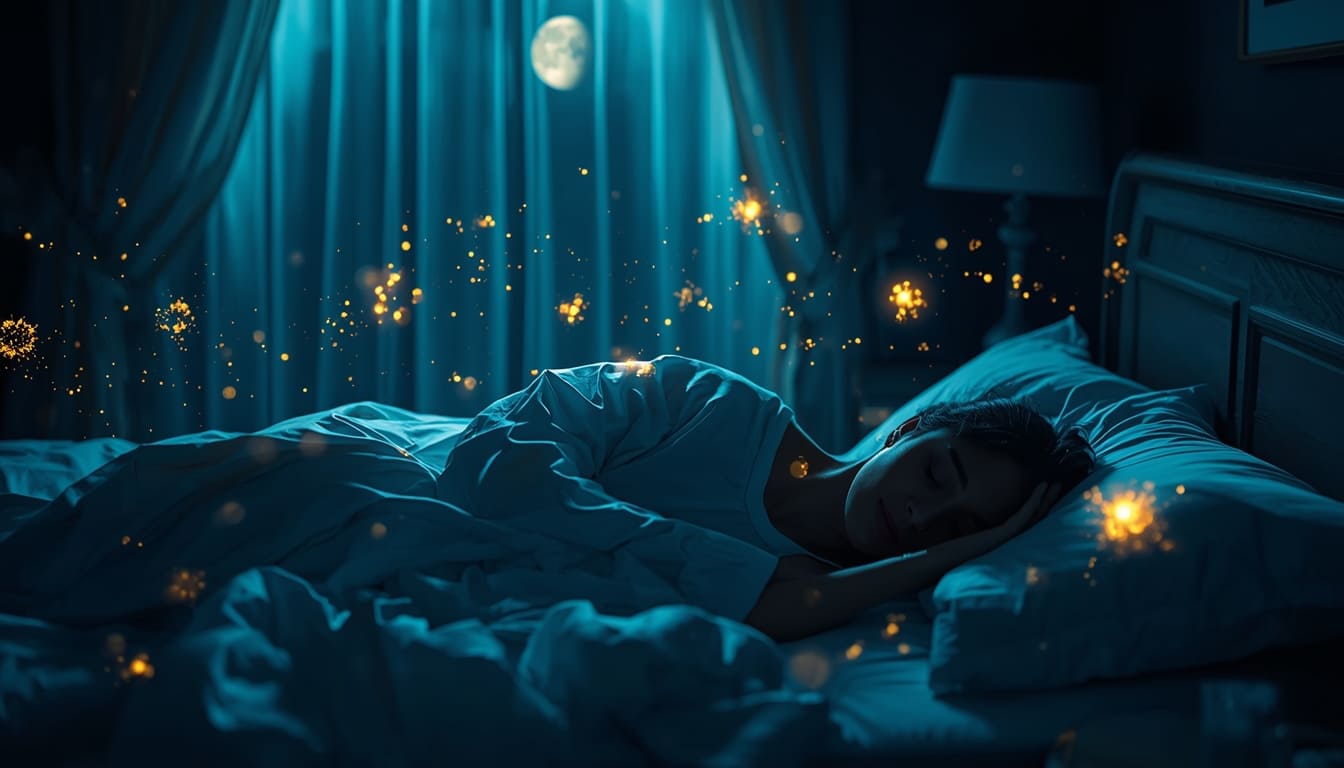
It’s not a new supplement. It’s not a smarter workout. It’s sleep. And once you understand what actually happens inside your body while you’re sleeping — or what doesn’t happen when you’re not — you’ll never look at your late nights the same way again.
You’re Not Lazy. You’re Running on Empty.
Let me paint a picture you might recognize.
You wake up already tired. You grab coffee before you can think straight. By 3 p.m., you’re fighting the urge to eat everything in sight. By evening, the healthy dinner you planned sounds like too much effort, and somehow you end up on the couch eating things you swore you wouldn’t touch. You go to bed feeling guilty. And then you do it all again tomorrow.
That’s not a willpower problem. That’s a sleep problem — and the science behind it is both humbling and incredibly freeing.
According to the CDC, 1 in 3 American adults regularly sleeps less than the recommended seven hours per night. That’s over 80 million people walking around in a state of chronic hormonal disruption — and blaming themselves for every craving, every plateau, every failed attempt to eat better and do better.
You deserved better information. Here it is.
What Actually Happens to Your Body While You Sleep
Most of us think of sleep as the body doing nothing. Lights out, pause, resume tomorrow.
But physiologically? Sleep is when your body does everything that matters.
While you sleep, your body releases growth hormone — the primary driver of overnight fat metabolism and muscle repair. It resets your insulin sensitivity, so your cells can actually respond to fuel properly the next day. It balances the two hormones that control hunger and fullness — ghrelin and leptin. And it processes cortisol, the stress hormone that, when left unchecked, sends fat directly to your midsection.
Cut sleep short — even by just one or two hours — and every single one of these processes gets disrupted. Not a little. Measurably, significantly, and night after night, cumulatively.
One Bad Night Changes Your Hunger — Chemically
Here’s where it gets personal. And maybe a little painful to read, because you’re going to recognize yourself in it.
After a poor night’s sleep, ghrelin — your hunger hormone — spikes sharply. Leptin — the hormone that tells your brain you’ve had enough — drops. Your brain stops receiving the “you’re full” signal clearly. And instead, it starts broadcasting something that feels remarkably like desperation.
A landmark study published in PLOS Medicine found that adults sleeping five hours or less had 15% higher ghrelin and 15% lower leptin than those sleeping eight hours. A University of Chicago follow-up found that sleep-deprived participants consumed an average of 300 extra calories per day without any conscious awareness of doing so.
Three hundred calories. Every single day. Just from being tired.
That’s not overeating. That’s your body screaming that it’s in crisis — using the only language it knows.
💡 And when your hormones are finally balanced by sleep, something beautiful happens: making good food choices becomes almost effortless. Our article How Mindful Eating Transforms Your Daily Life on All Fields Daily shows exactly what that looks like in practice.
You Can Exercise and Still Lose Mostly Muscle — If You’re Not Sleeping
This one is hard to hear. But you need to know it.
A study published in the Annals of Internal Medicine followed two groups of dieters eating the exact same number of calories. One group slept 8.5 hours. The other slept 5.5 hours. Both groups lost weight — but what they lost was completely different.
The well-rested group lost 55% of their weight from fat. The sleep-deprived group lost only 25% from fat — and the rest came from lean muscle.
Same food. Half the fat loss. Twice the muscle loss. Just from sleeping less.
Losing muscle while dieting doesn’t just slow your progress — it quietly lowers your metabolism, permanently raising the effort required to maintain any weight you do lose. It’s the invisible reason so many people hit a wall and never break through.
Why You Always Crave Junk After a Bad Night — It’s Not Your Fault
Angela, a 38-year-old project manager from Boston, was one of the most organized people you’d ever meet. Meal prepped every Sunday. Tracked her food religiously. But she was also finishing reports at midnight three or four times a week, running on five hours of sleep, and ending every single one of those days with cravings she genuinely couldn’t explain.
She thought she lacked willpower. Research says otherwise.
Brain imaging studies from UC Berkeley showed that sleep deprivation increased activity in the brain’s reward and craving center by up to 45% — while simultaneously impairing the prefrontal cortex, the part of your brain responsible for saying no.
Angela didn’t have a discipline problem. She had a sleep problem. And so do a lot of us.
💡 If you’ve ever felt judged or shamed for choices that — at their root — were a sleep and hormone issue, our article Toxic Fitness Culture: How to Avoid Common Pitfalls on All Fields Daily is something you need to read.
What Actually Good Sleep Looks Like — Practically
There’s a difference between hours in bed and genuinely restorative sleep. Here’s what the research consistently shows actually works — no expensive gadgets required:
Go to bed and wake up at the same time every day — yes, even weekends. Your circadian rhythm is a biological clock; randomizing it is like flying across time zones every single week.
Keep your bedroom cool — around 65–68°F. Your body temperature needs to drop to enter deep sleep. A cool room accelerates this naturally.
Put the screens away 60 minutes before bed. Blue light suppresses melatonin production by up to 50%, according to Harvard Medical School research. Your phone can wait. Your hormones can’t.
Stop drinking alcohol close to bedtime. It might feel like it helps you relax — but alcohol suppresses REM sleep, leaving you metabolically unrestored no matter how many hours you’re in bed.
Eat your last meal two to three hours before sleeping. Late-night eating elevates insulin and core body temperature, both of which disrupt sleep architecture.
Small habits. Profound consequences.
Your Assignment for Tonight — Not Next Monday. Tonight.
You don’t need a new diet to start. You don’t need a gym, a supplement, or a meal plan.
You need to go to bed 45 minutes earlier than you did last night. That’s it.
Set an alarm — not to wake up, but to start winding down. Dim the lights. Put the phone in another room. Let your nervous system remember what quiet feels like.
Your hunger hormones will begin shifting within 24 hours. Your cravings will soften within days. Your body composition will start responding within weeks. All from something you get to do lying down.
You Were Never the Problem
Hustle culture told us sleep was for the weak. That the serious people pushed through. That exhaustion was just the price of ambition.
But your body never agreed to those terms. And it has been quietly paying the price — in fat stored, in muscle lost, in cravings that felt shameful, in results that never came — while you blamed yourself for every bit of it.
You were never undisciplined. You were undersupported — by the advice you were given, and by the sleep you were never told you needed.
Tonight, that changes. 🌿
💬 Your Turn — All Fields Daily Wants to Hear From You
If something in this article hit close to home, we want to know. Drop a comment below — what’s the one thing you’re committing to starting tonight? We read every single response, and we genuinely mean it: we are rooting for you, every step of the way. 💛💪
Leave a Reply