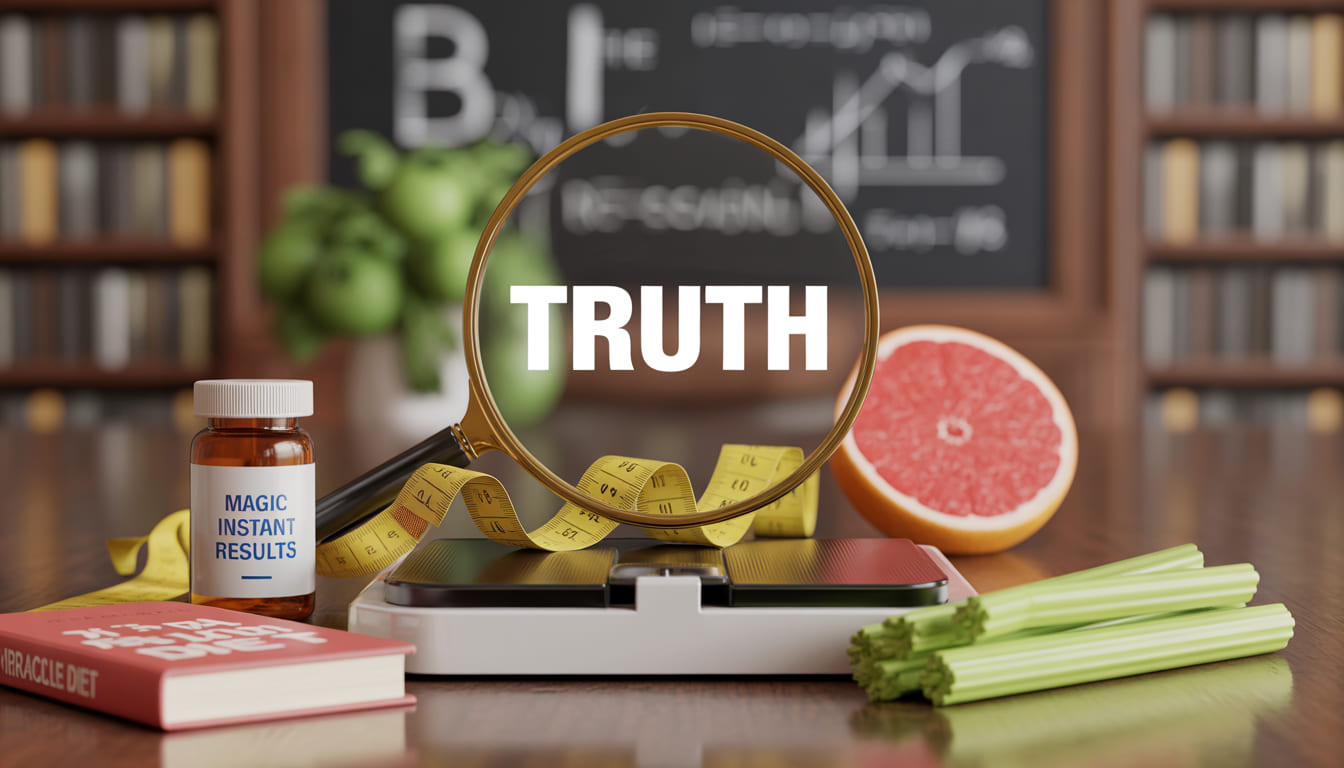
Let’s be honest for a moment. How many diets have you tried in the last five years? Keto, paleo, intermittent fasting, juice cleanses, detox teas—the list never ends.
Each one arrives with flashy promises. “Lose 10 pounds in 10 days!” “Detoxify your body!” “Reset your metabolism!” And each time, we think: Maybe this time will be different.
Spoiler alert: It won’t be. Not because you lack willpower. Not because you’re doing it wrong. But because fad diets are designed to fail. They are designed to keep you searching, buying, and believing that the next one will be the one.
Spoiler alert: It won’t be. Not because you lack willpower. Not because you’re doing it wrong. But because fad diets are designed to fail. They are designed to keep you searching, buying, and believing that the next one will be the one.
Here is the truth about fad diets: They profit from your frustration. And it’s time to break the cycle.
Why Fad Diets Fail Your Biology
Fad diets share one common feature: extreme restriction. Cut out an entire food group. Eat less than 1,200 calories. Only drink cabbage soup for a week.
Here is what happens inside your body when you do this. Your brain perceives restriction as a threat. It thinks: “Oh no, famine is coming. We need to conserve energy.” So it lowers your metabolic rate. It pumps out cortisol, the stress hormone. It increases ghrelin, the hunger hormone.
You lose weight initially—mostly water and muscle—because you’re starving. But then the weight loss stalls. You feel exhausted, irritable, and obsessed with food. Eventually, you “break” and eat the very thing you were avoiding. The weight comes back, often with extra friends.
This isn’t a character flaw. It’s biology. And it’s time we stopped blaming ourselves and started questioning the diets instead.
Myth #1: “You Need to Detox Your Body”
Walk into any health store and you’ll see shelves of detox teas, cleanses, and supplements promising to “flush toxins” from your body. It sounds scientific enough to be convincing.
Here is the truth: Your body comes with its own detox system. They’re called your liver and kidneys. These organs work 24/7 to filter waste, process nutrients, and eliminate what you don’t need. No tea, juice, or powder can improve on millions of years of evolution.
What actually helps your detox organs? Water. Fiber. Sleep. Movement. And not poisoning them with extreme restriction in the first place.
Action Step: Instead of buying a detox tea this month, spend that money on extra vegetables and a water filter. Your liver will thank you.
Myth #2: “Carbs Make You Gain Weight”
Few myths have caused more confusion than the war on carbohydrates. For decades, fat was the enemy. Now, carbs are the villain. Bread, pasta, fruit—suddenly they’re all “bad.”
Here is the nuance that gets lost: Your brain runs on glucose. Your muscles store glycogen for energy. Carbohydrates are literally your body’s preferred fuel source.
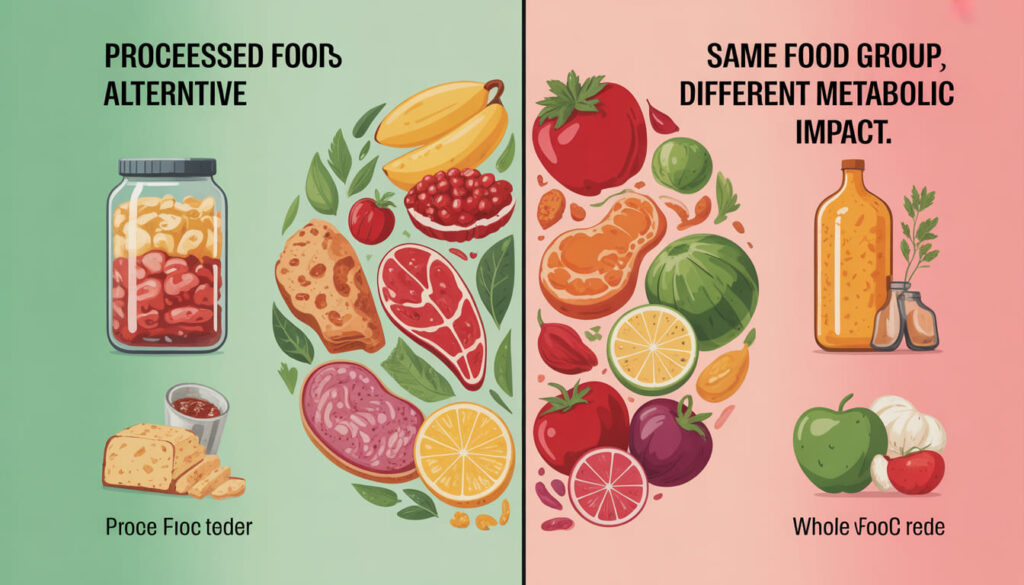
The problem isn’t carbs. The problem is ultra-processed carbs combined with refined sugars and lacking fiber. A whole apple with skin? That’s fiber, water, vitamins, and steady energy. A bag of gummy bears? That’s sugar with no nutritional backup.
Try this: Don’t cut carbs. Upgrade them. Choose oats over sugary cereal. Choose whole fruit over fruit juice. Choose sourdough or whole grain over white bread. Your energy levels will stabilize, and your cravings will drop.
Myth #3: “Eating Fat Makes You Fat”
This myth refuses to die, despite decades of research proving otherwise. Dietary fat is not the same as body fat. When you eat healthy fats, you’re providing your body with essential building blocks for hormones, brain function, and cell membranes.
Healthy fats—avocados, olive oil, nuts, seeds, fatty fish—actually support weight management. They slow down digestion, keeping you fuller longer. They stabilize blood sugar. They reduce inflammation.
The real culprit? Excess sugar and refined carbohydrates combined with processed vegetable oils. That’s the combination that drives metabolic dysfunction.
Action Step: Add a source of healthy fat to your next meal. Drizzle olive oil on your vegetables. Add avocado to your toast. Eat the whole egg, not just the white. Notice how much more satisfied you feel.
Myth #4: “You Need to Eat Small, Frequent Meals to Boost Metabolism”
For years, we were told to eat six small meals a day to “stoke the metabolic fire.” The theory sounded logical: eating creates digestion, digestion burns calories, so more meals equal more calories burned.
Research tells a different story. Meal frequency has minimal impact on total daily energy expenditure. What matters more is total food intake and food quality.
Some people thrive on three meals a day. Others prefer two larger meals with a snack. Some love intermittent fasting. There is no one-size-fits-all approach.
Try this: Experiment with your eating pattern for one week. Notice when you feel genuinely hungry. Notice when you feel energized versus sluggish. Your body has preferences. Listen to them.
Myth #5: “Weight Loss Is Just Calories In, Calories Out”
On paper, thermodynamics is simple: eat fewer calories than you burn, and you’ll lose weight. In a living, breathing human body with hormones, stress, sleep patterns, and emotions? It’s infinitely more complex.
Two people can eat the exact same number of calories and have completely different outcomes. Why? Because hormones regulate how those calories are used. Cortisol tells your body to store fat, especially around the middle. Insulin dictates whether energy is burned or stored. Sleep deprivation changes hunger hormones.
This isn’t an excuse to overeat. It’s an invitation to look beyond the numbers and address the underlying factors.
Action Step: Instead of dropping calories lower this week, focus on sleep. Commit to seven to eight hours for five nights. Watch what happens to your cravings and energy.
Myth #6: “You Can Spot-Reduce Fat”
Ab belts. Thigh creams. Waist trainers. The industry has made billions selling us the dream that we can choose where fat leaves our body.
Here is the disappointing truth: You cannot. Where you store fat is determined by genetics and hormones. Where you lose it first? Also genetics and hormones.
When you create a consistent calorie deficit through nourishing foods and movement, your body decides where to pull from. For some, the face changes first. For others, the chest. For many women, the belly is the last to go—thanks to estrogen and cortisol.
Try this: Shift your goal from “lose belly fat” to “build a strong, capable body.” Train your muscles. Walk daily. Eat enough protein. The visual changes will come, but the real win is how you feel.
Myth #7: “You Have to Earn Your Food”
This is perhaps the most toxic myth of all. The idea that you must exercise to “burn off” what you ate. That dessert requires a punishment at the gym. That food is a reward or a transgression rather than nourishment.
This mindset creates a terrible relationship with both food and movement. Exercise becomes penance. Food becomes guilt. And your body becomes a project to be fixed rather than a home to be loved.
Movement is a celebration of what your body can do. Food is fuel, pleasure, culture, and connection. They are partners, not enemies.
Try this: For one week, move your body because it feels good. Walk because the sun is shining. Stretch because your back is tight. Lift because strength feels powerful. Notice how different movement feels when it’s not attached to punishment.
Conclusion: From Dieting to Nourishing
The truth about fad diets is uncomfortable: They don’t work because they can’t work. They ask you to fight your biology, ignore your hunger, and disconnect from your body’s wisdom.
Real health isn’t about perfection. It’s about consistency. It’s about choosing vegetables most of the time and pizza some of the time. It’s about moving your body in ways that bring joy. It’s about sleeping enough, managing stress, and connecting with people you love.
These habits aren’t sexy. They don’t sell magazines or detox teas. But they work. They work because they’re sustainable. They work because they honor your humanity instead of fighting it.
So here is your permission slip: You can stop looking for the next diet. You already have everything you need. Your body knows what to do. You just have to get quiet enough to listen.
What is one diet myth you’re ready to let go of? Share in the comments—your freedom might inspire someone else’s.
Deja una respuesta